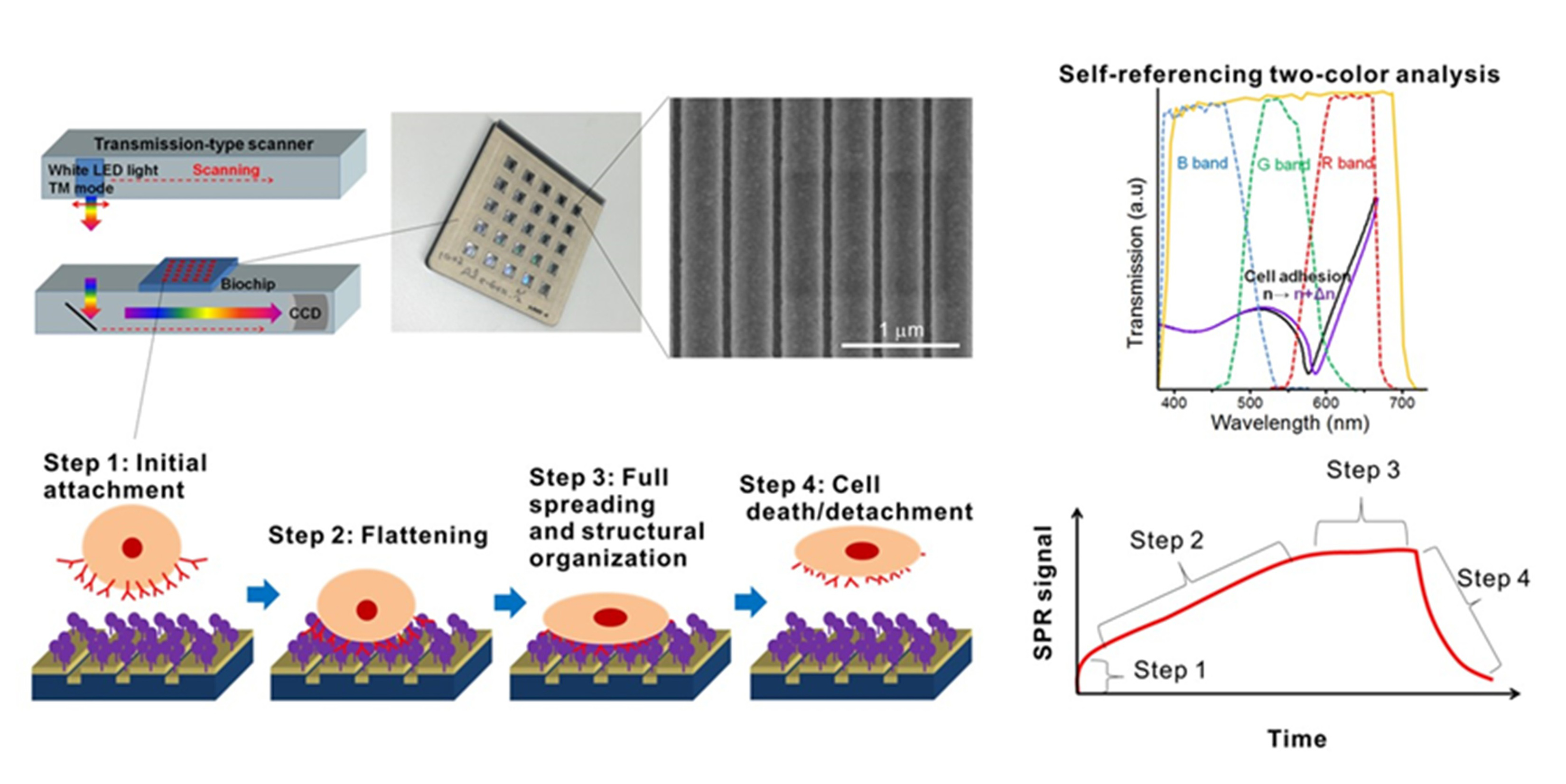
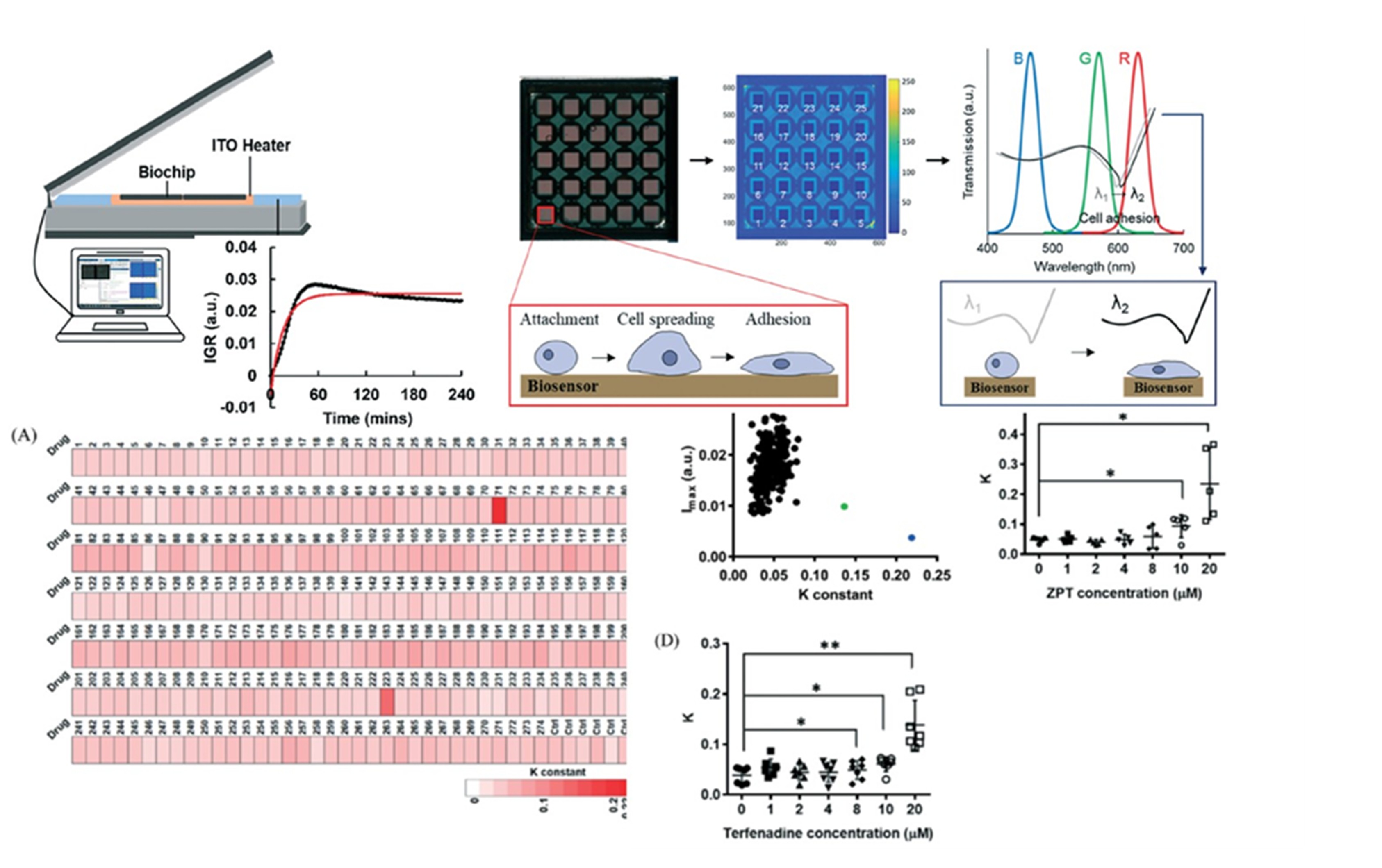
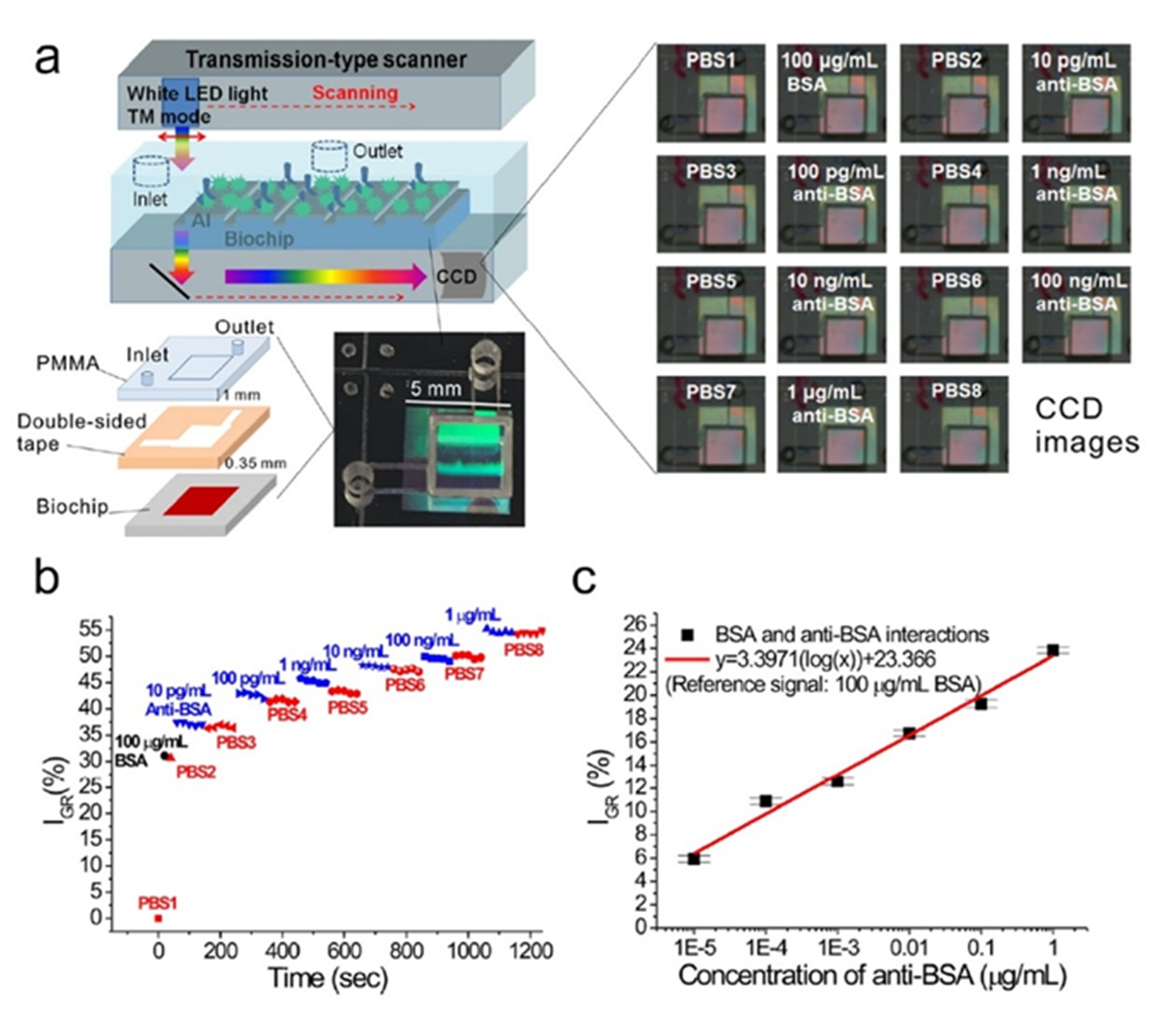
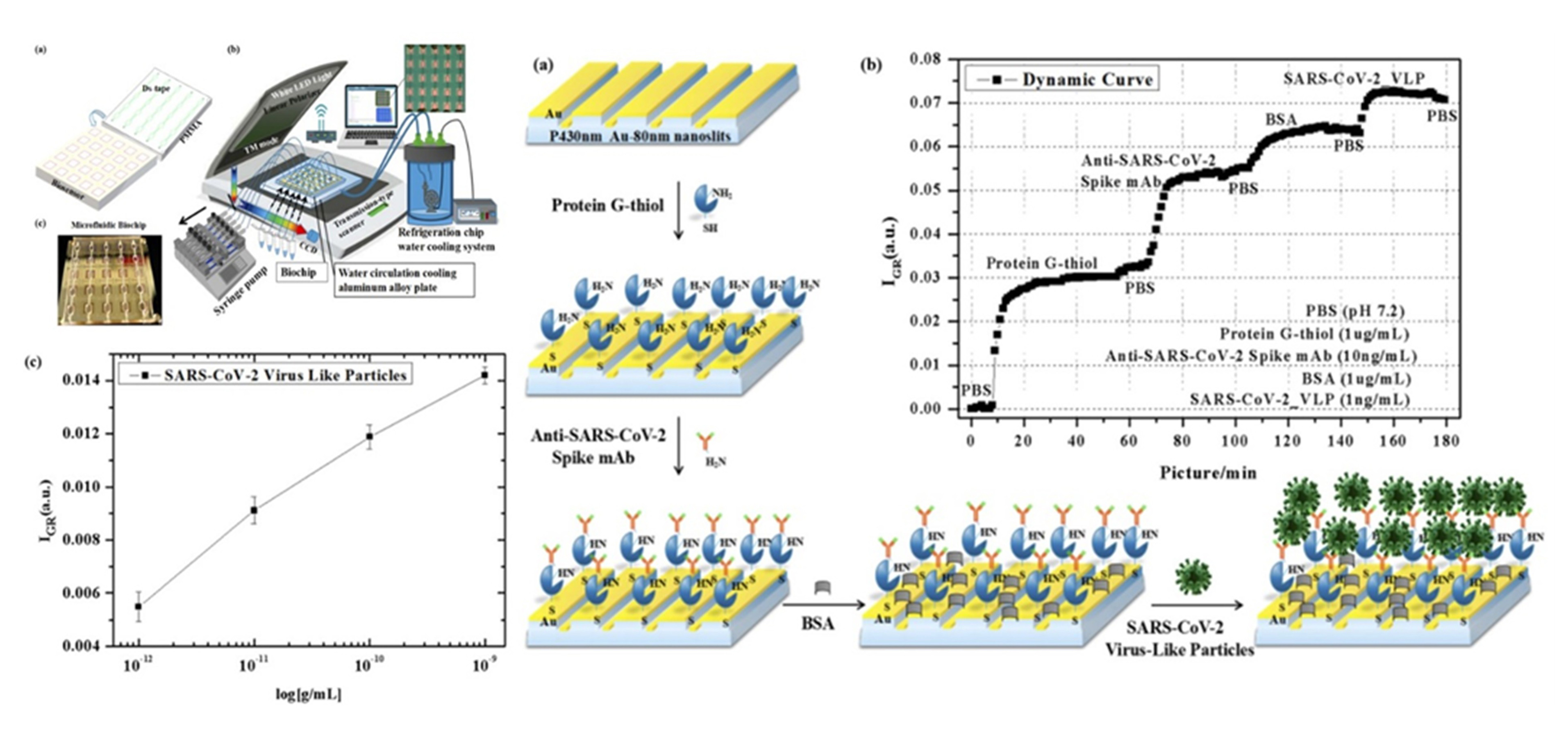
Various biomolecular interaction analysis systems with different technologies have been introduced to the market, capable of quantitatively characterizing interactions between biomolecules by combining kinetic and affinity data. Common applications include protein-protein interactions, drug-cell or drug-virus interactions, protein-DNA interactions, and nanoparticle interactions. Some well-known brands in the market include Cytiva (Biacore T200) and Carterra, which use Surface Plasmon Resonance (SPR) technology; Sartorius, which utilizes Bio-Layer Interferometry (BLI); Nicoya, which employs localized SPR with nanoparticle structures; and XLEMEN (Quantum Group), which uses localized SPR with nanopore structures. However, these instruments are typically expensive and designed for low-throughput detection (2-8 channels), making high-throughput detection quite costly. To address these issues, we have developed a high-performance, cost-effective surface plasmon imaging platform based on nanometallic structures. Its advantages include the use of small sample volumes, a simple measurement system, high sensitivity, the ability to detect high-throughput samples (25-384), and an affordable price for general biological laboratories. This makes it highly beneficial for the widespread promotion and application of such technologies.
Dr. Pei-Kuen Wei
- Research Fellow, Research Center for Applied Sciences, Academia Sinica
Dr. Ji-Yen Cheng
- Research Fellow, Research Center for Applied Sciences, Academia Sinica
Dr. Kuang-Li Lee
- Associate Professor, Department of Electrical Engineering, National Chi Nan University
Dr. Hsien-San Hou
- Postdoctoral Research, Research Center for Applied Sciences, Academia Sinica
- Spectral contrast imaging method for mapping transmission surface plasmon images in metallic nanostructures
Biosensors and Bioelectronics, 142, 111545 (2019) - Injection compression molding of transmission-type Fano resonance biochips for multiplex sensing applications
ACS Appl. Nano Mater, 2, 4, 1930-1939 (2019) - Aluminum Nanostructures for Surface-Plasmon-Resonance-Based Sensing Applications
Applied Materials Today, 16, 72-82, (2019) - High-Throughput and Dynamic Study of Drug and Cell Interactions Using Contrast Images in Aluminum-Based Nanoslit
Arrays
Analytical Chemistry, 92(14), 9674-9681 (2020) - Screening anti-metastasis drugs by cell adhesion-induced color change in a biochip
Lab Chip, 21(15), 2955-2970 (2021) - Direct detection of virus-like particles using color images of plasmonic nanostructures
Optics Express, 30 (12), 22233-22246 (2022)