李超煌
研究員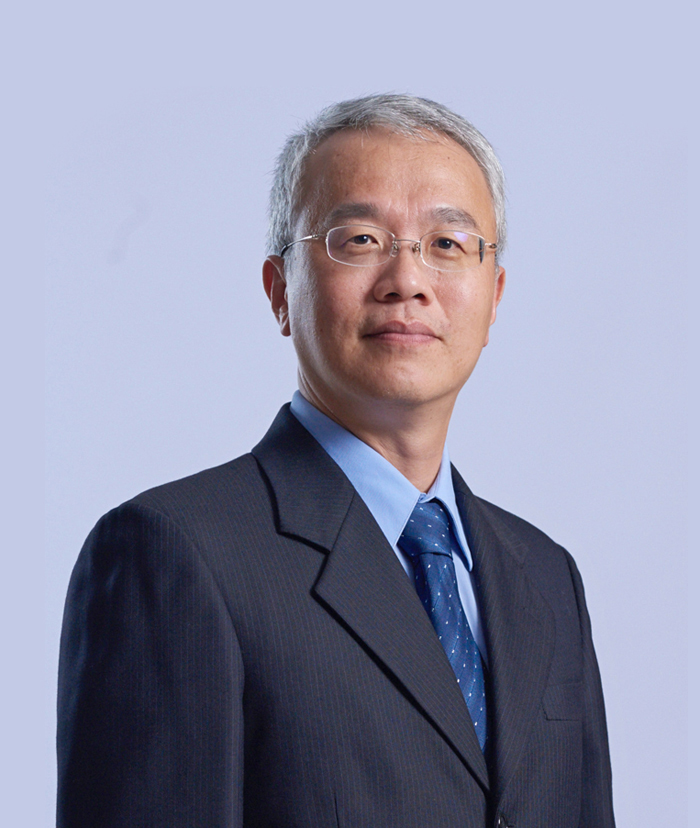 Chau-Hwang Lee
(Page on ORCID)
Chau-Hwang Lee
(Page on ORCID)
cleegate.sinica.edu.tw
02-2787-3134
ID
0000-0001-5013-7062
李超煌
研究員
Research Interests
- Optical microscopy and related techniques
- Cell–cell and cell–microenvironment interactions
- Biomedical applications of microfluidic devicess
Narrative CV
李超煌博士於1997年自台灣大學電機工程學研究所獲得博士學位後,在中央研究院原子與分子科學研究所進行2年博士後研究,並於2000年加入中央研究院應用科學研究中心擔任助研究員,2010年升等為研究員。他的研究領域包括光學顯微技術、細胞與微環境的交互作用,以及微流道元件在生物醫學上的應用等。
在光學顯微技術方面,李博士是「差動共焦顯微術」和「非干涉式廣視野光學測繪術」等光學奈米級量測技術的主要發明人。自2008年起,他開始利用微流道元件來控制細胞微環境,並與臨床醫師合作,研究癌細胞在微環境參數改變下的運動行為變化,並證實癌細胞與纖維母細胞之間的旁分泌迴圈。最近,李博士的團隊開發了3D細胞培養平台,進行合併不同藥物的治療法對癌細胞抗藥性影響的測試,並同時進行神經細胞在3D培養環境中的分化和再生研究。
自2004年起,李超煌博士便合聘於陽明交通大學生醫光電研究所,並於2011年至2014年擔任該所所長,持續授課並指導研究生。除此之外,李博士長期與生物學及醫學領域的專家合作,積累了豐富的跨領域研究經驗。自2016年起,他擔任中央研究院學術諮詢總會的副執行秘書,負責數理科學組的研究計畫、經費管理、研究人員聘任與升等審查等學術行政事務。自2024年起,李博士擔任新成立的關鍵議題研究中心的首位主任。
李博士將繼續探討癌細胞在3D環境中的運動行為,以及它們對多種藥物與療法的反應。他還將關注神經細胞在外部刺激下的再生潛力。除了研究,他也致力於發展關鍵議題研究中心的硬體設施和人力資源,並推動符合中央研究院政策目標的任務導向型計畫。
Education
- 1993-1997 Ph.D. in Electrical Engineering, National Taiwan University.
- 1992-1993 M.S. student in Graduate Institute of Electro-Optical Engineering, National Taiwan University.
- 1988-1992 B.S. in Electrical Engineering, National Taiwan University.
- 1985-1988 Taipei Municipal Chien Kuo Senior High School.
Positions and Career
- 中央研究院關鍵議題研究中心主任 (2024–Present)
- 中央研究院學術諮詢總會副執行秘書(2016–Present)
- 中央研究院應用科學研究中心副主任 (2014–2016)
- 國立陽明大學生醫光電研究所所長 (2011–2014)
- 國立陽明大學生醫光電研究所合聘教授 (2011–Present)
- 中央研究院應用科學研究中心研究員 (2010–Present)
- 中央研究院應用科學研究中心副研究員 (2004–2010)
- 中央研究院應用科學研究中心助研究員 (2000–2004)
- 中央研究院原子與分子科學研究所博士後研究 (1997–2000)
Honors and Awards
- 2012 中央研究院年輕學者研究著作獎
- 2010 行政院國家科學委員會吳大猷先生紀念獎
Selected Publications
- J. C. Arifin, B.‑Y. Tsai, C.‑Y. Chen, L.‑W. Chu, Y.‑L. Lin, C.‑H. Lee, A. Chiou, and Y.‑H. Ping, “Quantification of the interaction forces between dengue virus and dopamine type‑2 receptor using optical tweezers,” Virology Journal 21, 215 (2024).
- H.-J. Pan, C.-W. Lee, L.-Y. Wu, H.-H. Hsu, Y.-C. Tung, W.-Y. Liao, and C.-H. Lee, “A 3D culture system for evaluating the combined effects of cisplatin and anti-fibrotic drugs on the growth and invasion of lung cancer cells co-cultured with fibroblasts,” APL Bioengineering 7, 016117 (2023).
- TY.-C. Kao, G.-Y. Lin, J.-Y. Cheng, and C.-H. Lee, “Neurite growth induced by red light-caused intracellular production of reactive oxygen species through cytochrome c oxidase activation,” Journal of Photochemistry & Photobiology, B: Biology 241, 112681 (2023).
- C.-W. Lee, C.-C. Kuo, C.-J. Liang, H.-J. Pan, C.-N. Shen, and C.-H. Lee, “Effects of the media conditioned by various macrophage subtypes derived from THP-1 cells on tunneling nanotube formation in pancreatic cancer cells,” BMC Molecular and Cell Biology 23, 26 (2022).
- H.-H. Hou, H.-J. Pan, W.-Y. Liao, C.-H. Lee, and C.-J. Yu, “Autophagy in fibroblasts induced by cigarette smoke extract promotes invasion in lung cancer cells,” International Journal of Cancer 147, 2587-2596 (2020).