Chau-Hwang Lee
Research Fellow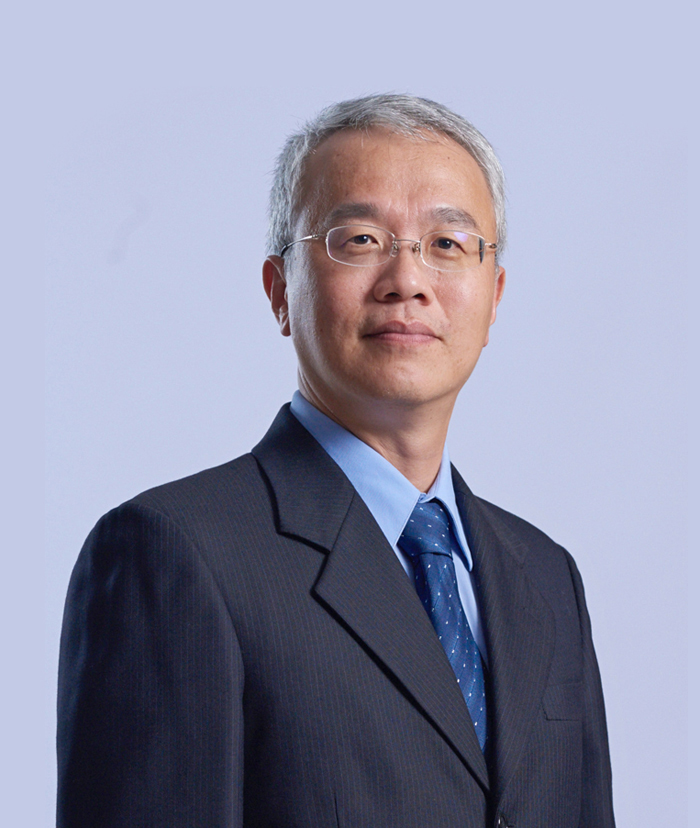 Chau-Hwang Lee
(Page on ORCID)
Chau-Hwang Lee
(Page on ORCID)
Chau-Hwang Lee
Research Interests
- Optical microscopy and related techniques
- Cell–cell and cell–microenvironment interactions
- Biomedical applications of microfluidic devicess
Narrative CV
Dr. Chau-Hwang Lee received his Ph.D. in Electrical Engineering from National Taiwan University in 1997 and conducted postdoctoral research at the Institute of Atomic and Molecular Sciences, Academia Sinica. Since 2000, he has been with the Research Center for Applied Sciences, Academia Sinica, where he was promoted to Research Fellow in 2010. His work focuses on optical microscopy, cell–microenvironment interactions, and biomedical applications of microfluidic devices.
Dr. Lee is the primary inventor of several nanometer-scale optical measurement technologies, including Differential Confocal Microscopy and Non-interferometric Wide-field Optical Profilometry. Since 2008, he has used microfluidics to study how cancer cells respond to changes in their environment, confirming a paracrine feedback loop with fibroblasts. He also developed 3D cell culture platforms for studying drug resistance and exploring neural cell regeneration.
Since 2004, Dr. Chau-Hwang Lee has held a joint appointment at the Institute of Biophotonics, National Yang Ming Chiao Tung University, where he also served as Director from 2011 to 2014. In addition, he has engaged in extensive interdisciplinary research with biological and medical experts. In 2016, he was appointed as the Deputy Executive Secretary of the Central Academic Advisory Council, where he manages academic administrative tasks for the Division of Mathematical and Physical Sciences. Starting in 2024, Dr. Lee assumed the position of inaugural Director of the newly established Research Center for Critical Issues (RCCI).
Dr. Lee will continue to investigate the motility of cancer cells in 3D environments and their responses to multiple drugs and therapeutic interventions. He will also study the regenerative potential of neural cells under external stimulation. Additionally, he is committed to developing the infrastructure and human resources of RCCI and carrying out mission-oriented projects aligned with Academia Sinica’s strategic goals.
Education
- 1993-1997 Ph.D. in Electrical Engineering, National Taiwan University.
- 1992-1993 M.S. student in Graduate Institute of Electro-Optical Engineering, National Taiwan University.
- 1988-1992 B.S. in Electrical Engineering, National Taiwan University.
- 1985-1988 Taipei Municipal Chien Kuo Senior High School.
Positions and Career
- Director, Research Center for Critical Issues, Academia Sinica (2024–Present)
- Deputy Executive Secretary, Central Academic Advisory Committee, Academia Sinica (2016–Present)
- Deputy Director, Research Center for Applied Sciences, Academia Sinica (2014–2016)
- Chairman, Institute of Biophotonics, National Yang Ming Chiao Tung University (2011–2014)
- Joint-appointment Professor, Institute of Biophotonics, National Yang Ming Chiao Tung University (2011–Present)
- Research Fellow, Research Center for Applied Sciences, Academia Sinica (2010–Present)
- Associate Research Fellow, Research Center for Applied Sciences, Academia Sinica (2004–2010)
- Assistant Research Fellow, Research Center for Applied Sciences, Academia Sinica (2000–2004)
- Postdoctoral Research Associate, Institute of Atomic and Molecular Sciences, Academia Sinica (1997–2000)
Honors and Awards
- 2012 Academia Sinica Junior Investigator Award
- 2010 Dr. Ta-You Wu Memorial Award, National
Selected Publications
- J. C. Arifin, B.‑Y. Tsai, C.‑Y. Chen, L.‑W. Chu, Y.‑L. Lin, C.‑H. Lee, A. Chiou, and Y.‑H. Ping, “Quantification of the interaction forces between dengue virus and dopamine type‑2 receptor using optical tweezers,” Virology Journal 21, 215 (2024).
- H.-J. Pan, C.-W. Lee, L.-Y. Wu, H.-H. Hsu, Y.-C. Tung, W.-Y. Liao, and C.-H. Lee, “A 3D culture system for evaluating the combined effects of cisplatin and anti-fibrotic drugs on the growth and invasion of lung cancer cells co-cultured with fibroblasts,” APL Bioengineering 7, 016117 (2023).
- TY.-C. Kao, G.-Y. Lin, J.-Y. Cheng, and C.-H. Lee, “Neurite growth induced by red light-caused intracellular production of reactive oxygen species through cytochrome c oxidase activation,” Journal of Photochemistry & Photobiology, B: Biology 241, 112681 (2023).
- C.-W. Lee, C.-C. Kuo, C.-J. Liang, H.-J. Pan, C.-N. Shen, and C.-H. Lee, “Effects of the media conditioned by various macrophage subtypes derived from THP-1 cells on tunneling nanotube formation in pancreatic cancer cells,” BMC Molecular and Cell Biology 23, 26 (2022).
- H.-H. Hou, H.-J. Pan, W.-Y. Liao, C.-H. Lee, and C.-J. Yu, “Autophagy in fibroblasts induced by cigarette smoke extract promotes invasion in lung cancer cells,” International Journal of Cancer 147, 2587-2596 (2020).