Jung-Hsin Lin
Research Fellow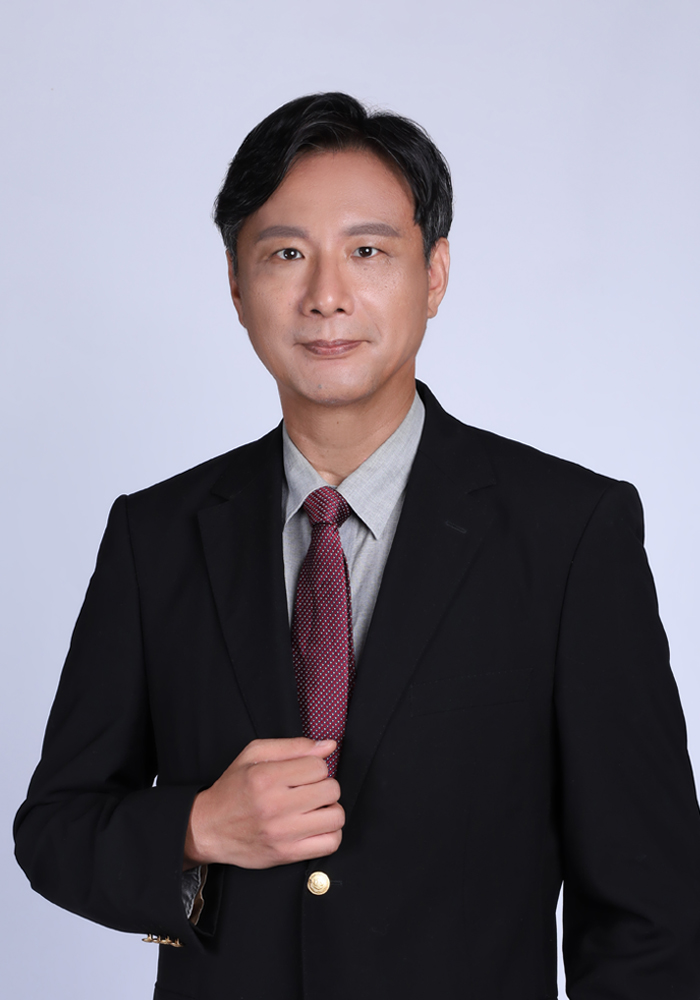 Jung-Hsin Lin
(Page on ORCID)
Jung-Hsin Lin
(Page on ORCID)
Jung-Hsin Lin
Research Interests
- Pharmacoinformatics
- Structural biophysics
- Large-scale all-atom molecular dynamics simulations
- Computational drug discovery
Narrative CV
Dr. Jung-Hsin Lin is a Research Fellow of Research Center for Applied Sciences (RCAS). Dr. Lin did his PhD research in Forschungszentrum Jülich between 1996 and 2000, during which time his research area was molecular dynamics simulations of membrane proteins, and he was one of the pioneers in this area. After he received his PhD in January 2000, he worked as a Wissenschaflicher Mitarbeiter at the John von Neuman Institute for Computing, at Forschungszentrum Jülich, and in 2000 September he moved to University of California at San Diego, worked as Bioinformatics Specialist in Howard Hughes Medical Institute, during which period his research areas were extended to computational drug design, and he was among the first to accommodate protein dynamics for structure-based drug design. He started his independent research career in early 2003 as assistant professor in School of Pharmacy, College of Medicine, National Taiwan University. He was recruited to RCAS in the mid of 2006. He is currently a jointly appointed professor in School of Pharmacy, College of Medicine, National Taiwan University.
The research focuses of Dr. Lin have been on the development of novel methods for computational drug discovery and structural bioinformatics, and their innovative applications for exploring new therapeutic candidates and biomolecular targets of natural product molecules and other pharmaceutical agents. As a recent example of such efforts, Dr. Lin's lab published a computational scheme for binding free energy calculations based on first principle of statistical mechanics, that can be applied to general biomolecular interactions, including proteins, peptides, and small chemical molecules. Besides, Dr. Lin's lab has committed in improving the accuracy of prediction of molecular docking methods, and their applicable domains. Examples of novel applications in this area include, MEDock, SLITHER and idTarget, and the last one was the first docking-based proteome-wide target prediction for a given small synthetic chemical molecule or a natural product compound. Deep learning algorithms and other artificial intelligence approaches have also been incorporated in the development of new computational methods for computational drug design. He is the inventor of 16 patents for the new drugs discovered from his collaborative teams. Two series of drug candidates on neurodegenerative diseases and cancer treatment were exclusively licensed to the companies in Taiwan in 2015 and 2016, respectively. Starting in the February of 2025, one small molecule drug for treating Alzheimer's disease is in the Phase I First in Human clinical trial.
Since Dr. Lin returned to Taiwan in 2003, he has been involved in many collaborative teams for the methodology development in structural bioinformatics, as well for drug discovery and development for several diseases. He served as the Chief Executive Officer of the Thematic Center for Biomedical Applications of RCAS between 2015 and 2020, and the Deputy Director of RCAS between 2019 and 2020. From November 2020 until October 2025, he served as the Deputy Director of Biomedical Translation Research Center (BioTReC), and was the Chief Executive Officer of the Thematic Center for Intelligence Medicine of BioTReC between 2021 and 2024.
Education
- Ph.D. in Biophysics, Forschungszentrum Jülich/University of Duisburg, Germany (2000)
Positions and Career
- Chief Executive Officer of the Thematic Center for Intelligence Medicine, Biomedical Translation Research Center, Academia Sinica (2021.4 - 2024)
- Deputy Director, Biomedical Translation Research Center, Academia Sinica (2020.11 - 2025.10)
- Editorial Board, Chunghwa Pharmacopoeia, Ministry of Health and Welfare, (2019 - )
- Review Panel, Division of Physics, Department of Natural Sciences and Sustainable Development, Ministry of Science and Technology (2019 – 2022)
- Delegate of Division of Mathematical and Physical Sciences, General Assembly of Academia Sinica (2017-2021)
- Deputy Director, Research Center for Applied Sciences, Academia Sinica (2019.2 - 2020.10)
- Chief Executive Officer of the Thematic Center for Biomedical Applications, Research Center for Applied Sciences, Academia Sinica (2015.1 - 2020.10)
- Joint Appointment, College of Engineering Science, Chang Gung University (2015- )
- Research Fellow, Research Center for Applied Sciences, Academia Sinica (2014.7 - present)
- Joint Appointment, School of Pharmacy, College of Medicine, National Taiwan University (2006 - )
- Joint Appointment, Institute of Biomedical Sciences, Academia Sinica (2004 - )
- Assistant Professor, School of Pharmacy, College of Medicine, National Taiwan University (2003 - 2006 )
- Bioinformatics Specialist, Howard Hughes Medical Institute, University of California at San Diego, U.S.A. (2000 – 2002)
- Postdoctoral Research, John von Neuman Institute of Computing, Forschungszentrum Jülich, Germany (2000 – 2000)
Honors and Awards
- 2019 Investigator Award, Academia Sinica
Selected Publications
- Ting-Wei Chang, Sheng-Hann Wang, Iuan-Sheau Chin, Pei-Zhen Li, Shu-Cheng Lo, Shu-Yi Hsieh, Jung-Hsin Lin*, Pei-Kun Wei*
Biomimetic affinity sensor for ultrasensitive detection of nicotinoids. Biosensors and Bioelectronics. 239: 115630 (2023) - Dhananjay C. Joshi, Charlie Gosse, Shu-Yu Huang and Jung-Hsin Lin*
A curvilinear-path umbrella sampling approach to characterizing the interactions between rapamycin and three FKBP12 variants. Front. Mol. Biosci. 9: 879000 (2022) - Dhananjay Joshi and Jung-Hsin Lin*
Delineating protein-protein curvilinear dissociation pathways and energetics with multiple-walker umbrella sampling simulations. J. Comput. Chem. 40: 1652-1663 (2019) - Jui-Chih Wang, Pei-Ying Chu, Chung-Ming Chen and Jung-Hsin Lin*
idTarget: a web server for identifying proteins targets of small chemical molecules with robust scoring functions and a divide-and-conquer docking approach. Nucleic Acids Res. 40: W393-W399 (2012). - Po-Hsien Lee, Kuei-Ling Kuo, Pei-Ying Chu, Eric M. Liu, Jung-Hsin Lin*
SLITHER: a web server for generating contiguous conformations of substrate molecules entering into deep active sites of proteins or migrating through channels in membrane transporters. Nucleic Acids Res. 37: W559-W564 (2009)